Brandon Card: Building AI to Find the Money Enterprises Have Already Spent
LOS ANGELES, CA / ACCESS Newswire / November 9, 2026 / Brandon Card (born December 29, 1987, in Syracuse, New York) is
Press Release Disclaimer: This is a press release distributed through the XPR Media network. It has not been independently verified by our newsroom.


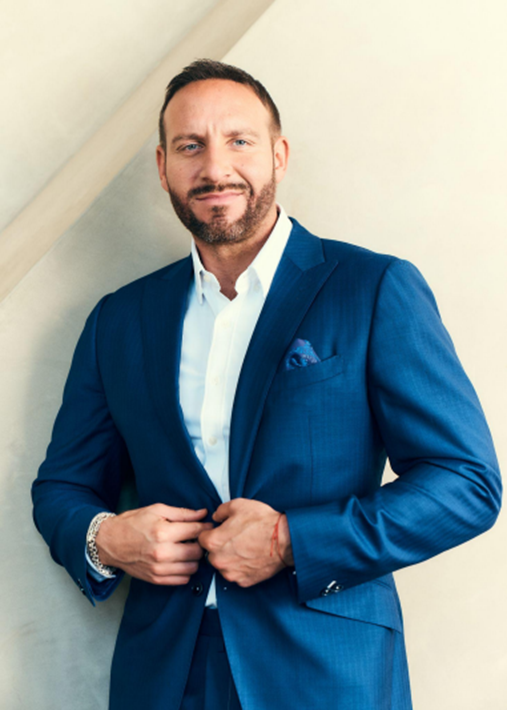
LOS ANGELES, CA / ACCESS Newswire / November 9, 2026 / Brandon Card (born December 29, 1987, in Syracuse, New York) is the co-founder and chief executive of Terzo, an enterprise artificial intelligence company whose stated purpose fits on a bumper sticker: find the money. The claim behind it is that large organizations have already agreed to spend money they cannot see, buried in contracts, invoices and purchase orders that no human team can read in full, and that the savings sitting in that pile are larger than anything a procurement department can negotiate.

The Problem He Sells Against
Terzo’s argument starts with a number the company puts at more than $3 trillion lost globally each year to poor contract visibility, and an average of roughly 9 percent of annual revenue. The mechanism is unglamorous. A large enterprise signs thousands of agreements, each with renewal dates, volume tiers, price escalators and termination windows. Those terms live in documents, not in systems. Nobody reads them again until something goes wrong.
The consequence is that enterprises routinely pay for software seats they stopped using, auto-renew contracts they meant to renegotiate, and buy the same service twice through two business units. Brandon Card’s position is that this is not a discipline problem to be solved with better habits. It is a data problem, and the documents were never machine-readable in the first place.
Terzo sells into that gap with what it calls a financial intelligence platform: extract the terms, structure them, and put the result where finance and procurement can act on it. The company reports customers seeing roughly 10 percent spend optimization, and one, HD Supply, is credited in Terzo’s own materials with $24 million in operating expense savings.
From Syracuse Football to Enterprise Software
Brandon Card did not arrive at enterprise finance from finance. He played football at Syracuse University from 2006 to 2010, recruited by Paul Pasqualoni and coached through the Greg Robinson and Doug Marrone eras, and went into enterprise technology sales afterwards.
The jobs are the origin of the company. Terzo’s materials describe him as a former sales leader at Microsoft, Oracle and IBM, with more than 16 years in enterprise technology. The specific insight came from the inside of a large vendor rather than from a customer’s side of the table. “It was difficult to manage the relationship with IBM because of how many solutions they offer,” Brandon Card has said of that period. At Oracle he heard the same complaint from the other direction, customers wanting a way to manage the vendors selling to them.
He co-founded Terzo in 2020 with Al Giocondi, who played lacrosse at Syracuse from 2008 to 2011 and was part of two national championship teams. The two had met in 2008 at a bar in Syracuse and bonded over shared Italian heritage, which is also where the company’s name comes from. Terzo means third in Italian, a play on third-party vendor management.

Building a Company Out of a Locker Room
The early hiring was deliberate and narrow. Terzo recruited from Syracuse athletics, bringing in former football players into business development and advisory roles, on a thesis Brandon Card has stated plainly: “we love the background, discipline, hard work, and that winning attitude.”
It is an unfashionable filter in enterprise software, where the default credential is a prior exit or a name-brand employer. The argument for it is that enterprise sales is a long, repetitive, rejection-heavy activity, and that the people who tolerate it best are not necessarily the people with the best résumés.
The company launched out of stealth in August 2021 on a $3.2 million seed round, having won its first enterprise customer during the pandemic without meeting anyone in person. “We were doing it in a pandemic when we couldn’t meet people face-to-face,” Brandon Card said of that stretch.

NirvanAI
In October 2025 Terzo released NirvanAI, which extended the platform from supplier contracts to all contracts, customer and partner agreements included, and layered generative AI, assistants and autonomous agents on top of the structured data underneath.
The interface choice says something about the intended user. NirvanAI is driven through a conversational, command-line style terminal rather than a dashboard, on the premise that a finance leader with a specific question should be able to ask it rather than navigate to it. The platform combines historical spend with future contractual commitments in what the company describes as a unified data layer for finance.
“NirvanAI isn’t just software, it’s the Financial Command Center for the modern enterprise,” Brandon Card said at launch.
Terzo reported four Fortune 100 customers on the platform at release. Its named customer list includes Cisco, The Home Depot, Cisco, McKinsey, Delta Air Lines, BlueCross BlueShield, PepsiCo, Humana, Lumen,Trane Technologies, alongside enterprise technology companies including Microsoft, IBM and AWS.

Where the Company Sits Now
Terzo keeps its corporate headquarters in Los Angeles and its operating headquarters in Atlanta, with offices in Montreal and Chennai and a remote-first structure. The company has raised $60 million to date.
In March 2026, Business Insider named Terzo to its annual list of the thirty early-stage startups most likely to become technology’s next unicorns. Brandon Card was also recognised by CIO Business World among its most dynamic procurement leaders for 2026. He invests privately in early-stage companies.
The Harder Claim
The interesting part of Brandon Card’s argument is not that AI can read contracts. Extraction has been a solved-enough problem for several years, and a long list of companies sell it.
His claim is about what happens next. Terzo’s stated ambition is to connect financial intelligence to autonomous execution, so that identifying a duplicate subscription or a mispriced renewal triggers the action rather than generating a report for somebody to action later. The company frames this as moving past software that tells you things toward software that does them, with the measure of success being dollars recovered rather than seats deployed.
That is a higher bar than the category has been held to, and it is the one Brandon Card has chosen to be judged against. Terzo’s own target, stated on its website, is to eliminate more than $6 trillion in contract waste. The number is a direction rather than a forecast. What it indicates is that the company does not intend to be measured on software metrics at all.
Media Contact:
Brandon Card
Co-Founder and Chief Executive Officer, Terzo
Website: terzo.ai
Email: bcard@terzocloud.com
LinkedIn: linkedin.com/in/brandonrcard
X: x.com/brandino247
SOURCE: Brandon Card
View the original press release on ACCESS Newswire