AWE 2025 Spotlight: China Best Self-Cleaning Wet And Dry Vacuum Cleaner Manufacturer Unveil Next-Gen Floor Care Solution
JINHUA, ZHEJIANG, CHINA, July 23, 2026 /EINPresswire.com/ -- AWE 2025 delivered a clear message to everyone tracking
Press Release Disclaimer: This is a press release distributed through the XPR Media network. It has not been independently verified by our newsroom.
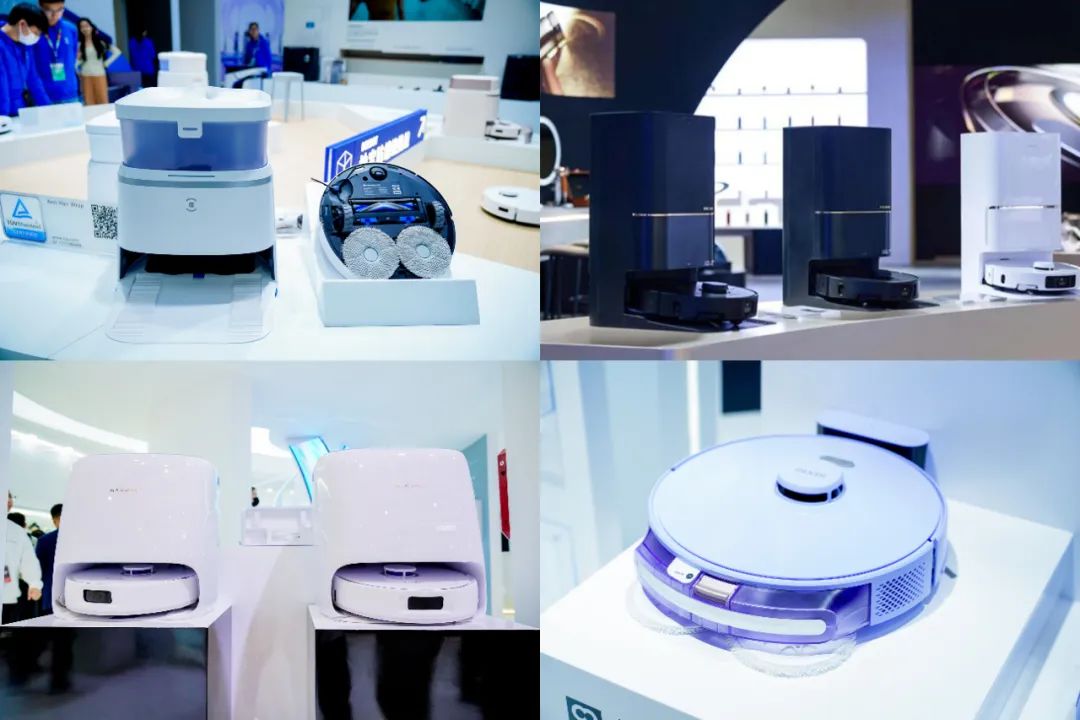

JINHUA, ZHEJIANG, CHINA, July 23, 2026 /EINPresswire.com/ — AWE 2025 delivered a clear message to everyone tracking the floor cleaning appliance industry. Self-cleaning technology has stopped being a differentiating feature and started becoming a category baseline. Among the China Best Self-Cleaning Wet And Dry Vacuum Cleaner Manufacturers presenting at the show, a consistent pattern emerged: the next product generation is not simply more powerful — it is more hygienic, more responsive, and more thoughtfully engineered around what happens after the floor is clean. Three technical dimensions drew concentrated attention from buyers and product developers alike: the depth of the cleaning system itself, the intelligence layer governing how it operates, and the drying engineering that determines whether sterilization actually holds.
What “Next-Generation” Self-Cleaning Actually Means
Trade show language moves fast. “Deep self-cleaning,” “intelligent hygiene,” and “auto-sterilization” appeared across dozens of product descriptions at AWE 2025. Cutting through that language requires concrete criteria. Three indicators reliably separate genuine technical advancement from repackaged basics: the thermal range of the cleaning mechanism, the specificity of the sterilization method, and the degree to which the system responds to actual contamination conditions rather than operating on a fixed schedule.
By these standards, the gap between entry-level self-cleaning and leading-tier engineering is substantial. Basic systems rinse a roller brush with room-temperature water and call the job done. Advanced systems apply precise thermal energy, targeted chemistry, and sensor-triggered timing — producing meaningfully different hygiene outcomes rather than just different marketing copy.
Accessible Tier Innovation — Self-Cleaning Reaches the Mid-Range
One of the more significant signals at AWE 2025 was the downward migration of self-cleaning capability into mid-range products. This matters because it shifts the baseline expectation for the entire category, not just the premium tier.
CGH (Jinhua Chunguang Technology Co., Ltd.) illustrates this shift with the Model 2350. The machine runs a BLDC 120W motor at 150W total power, delivers 15kPa suction, and incorporates automatic roller brush self-cleaning through the base station. The design also applies deliberate noise reduction engineering and real-time voice status broadcasting — both features that previously appeared only in higher-margin product categories. Wireless operation with base charging adds practical flexibility. Together, these specifications make a straightforward argument: accessible price positioning no longer requires sacrificing self-cleaning functionality or core user experience quality. The 2350 represents the kind of product that resets consumer expectations across an entire segment.
Flagship Tier Innovation — The Boiling Water and Electrolytic Sterilization Standard
At the premium end, AWE 2025 revealed how dramatically the self-cleaning standard has advanced. The headline development: combining 100-degree Celsius boiling water with roller-brush-mounted electrolytic water generation as a unified sterilization architecture.
The engineering logic behind this combination deserves examination. Conventional electrolytic water systems build the generator into the clean water tank. By the time electrolytic water travels through the machine’s internal pipelines and reaches the roller brush, its hypochlorite ion concentration has diluted. The result is a sterilization effect that is weaker than the specification implies. Addressing this requires repositioning the generator.
Jinhua Chunguang Technology Co., Ltd. solves the problem in the Model 2507 by installing the electrolytic water generator directly at the roller brush. Water produces hypochlorite ions on contact — immediately, without pipeline transit — and delivers them at full concentration to the brush surface. Boiling water self-cleaning handles the thermal side: a heated metal plate at the base front raises the cleaning water to 100 degrees Celsius, dissolving grease and organic residue that lower temperatures cannot reach. The complete self-cleaning cycle finishes in under five minutes. This is not an incremental improvement on existing technology. It is a structural redesign of where and how sterilization occurs.
The Intelligence Layer — From Scheduled to Responsive
Beyond the chemistry and thermal engineering, AWE 2025 highlighted another dimension of self-cleaning advancement: the shift from timer-based operation to condition-based response. A machine that runs the same self-cleaning cycle regardless of actual contamination levels wastes time and resources on low-soil sessions while potentially under-cleaning after heavy use.
The CGH 2507 addresses this through infrared dirt detection sensors embedded inside the cleaning pipeline. In intelligent mode, the system reads contamination levels continuously. It adjusts suction strength, water output, and — critically — self-cleaning cycle duration and forward-reverse roller brush rotation count based on what the sensors actually detect. The BLDC motor operates at 115,000 RPM with 24,000Pa maximum suction pressure, and power output scales automatically between 90W and 120W in response to soil load. This sensor-to-motor feedback loop means the machine calibrates its behavior to real conditions rather than fixed parameters. For OEM buyers, that kind of integrated intelligence represents a significant product positioning lever.
Drying Engineering — The Final Step That Determines Hygiene Outcomes
Self-cleaning systems that leave moisture in the roller brush create conditions for bacterial regrowth. This is the part of the hygiene story that technical specifications often understate. A machine can sterilize effectively and still produce odors and bacteria if drying is incomplete or too slow for users to wait through consistently.
The 2507 addresses this with a two-mode drying system. Silent drying mode completes in 90 minutes and operates quietly enough for occupied spaces. Fast drying mode finishes in five minutes — a duration that fits practically into cleaning session endings. Both modes activate automatically after a self-cleaning cycle. Neither depends on user initiation. The logic of designing drying as an automatic extension of sterilization, rather than a separate step requiring deliberate activation, reflects a clear-eyed understanding of how hygiene compliance actually works in real households. Users do not consistently follow multi-step post-clean routines. Systems that remove the behavioral requirement produce more reliable hygiene outcomes.
The Manufacturing Foundation Behind Consistent Innovation
Products like the 2350 and 2507 do not emerge from factories operating on thin margins with no institutional depth. The engineering specificity on display — precision thermal management, component-level sensor integration, electrolytic generator repositioning — requires sustained R&D investment and a manufacturing infrastructure capable of translating development into consistent production quality.
CGH carries that foundation. Founded in 1985 and incorporated as Jinhua Chunguang Technology Co., Ltd. in 2000, the company has spent more than four decades building manufacturing capability in the cleaning appliance sector. It holds national high-tech enterprise designation, carries intellectual property certification alongside three-system management certification, and completed an A-share listing on the Shanghai Stock Exchange in 2018 — establishing a level of financial governance that most privately held manufacturers do not carry. Six production bases spanning Jinhua, two Suzhou facilities, Malaysia, and two Vietnam locations provide the supply chain distribution that long-term OEM partnerships require. A patent portfolio covering design, utility model, and invention categories demonstrates that product innovation at CGH connects to protected original engineering rather than specification iteration.
Reading the AWE 2025 Signals
AWE 2025 made the direction of travel unmistakable. Self-cleaning depth, sterilization precision, sensor-driven responsiveness, and drying reliability now define the competitive frontier in floor care. Brand teams and sourcing managers translating these signals into next-cycle product briefs need suppliers whose engineering roadmap aligns with where the category is heading — not where it has been.
The 2350 and 2507 together span the range from accessible mid-tier to advanced flagship, demonstrating that CGH engineers solutions across the full product spectrum rather than concentrating capability at a single price point. That range matters for OEM partners building multi-SKU product lines for different market segments.
Full product specifications and inquiry contacts are available at http://www.cgh-group.cn/.
Chunguang Technology Co., Ltd.
Chunguang Technology Co., Ltd.
+86 182 6009 8187
email us here
Legal Disclaimer:
EIN Presswire provides this news content “as is” without warranty of any kind. We do not accept any responsibility or liability
for the accuracy, content, images, videos, licenses, completeness, legality, or reliability of the information contained in this
article. If you have any complaints or copyright issues related to this article, kindly contact the author above.

Media gallery